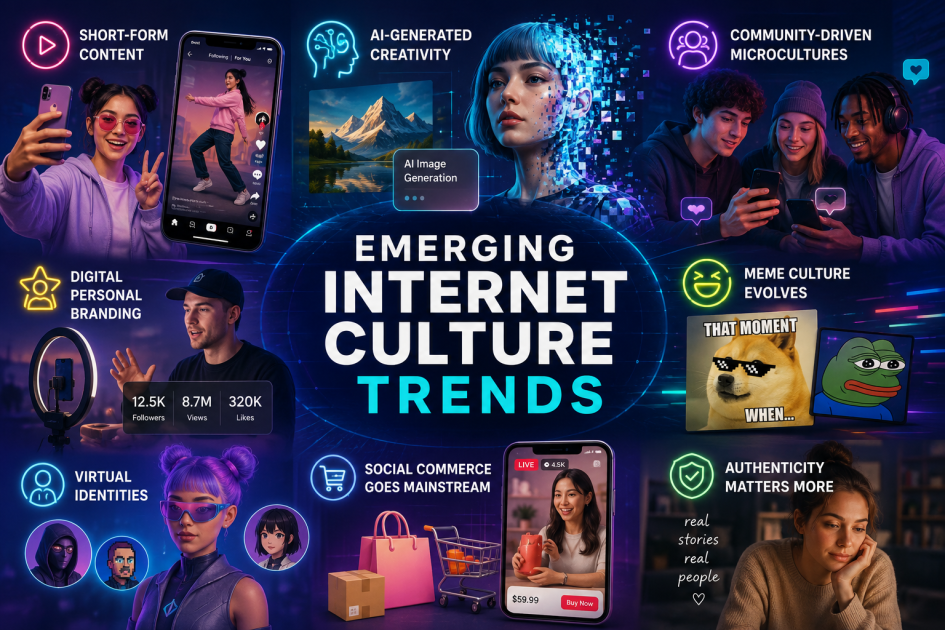
The internet continues to evolve at an incredible pace, shaping how people communicate, consume content, and interact with the world around them. What starts as a niche online behavior can quickly become a global phenomenon, influencing industries, entertainment, marketing, and even everyday conversations. As digital platforms become more interconnected, new internet culture trends emerge faster than ever before.
In 2026, Internet culture is being driven by short-form content, artificial intelligence, online communities, creator economies, and rapidly changing social media habits. Understanding these trends helps explain how modern digital culture is evolving and where it may be heading next.
The Rise of Hyper-Short Content
Attention spans online continue to shrink, leading to the growing popularity of hyper-short content. Videos lasting between 5 and 30 seconds now dominate platforms such as TikTok, Instagram Reels, YouTube Shorts, and emerging mobile-first networks.
Instead of watching long videos or reading lengthy articles, many users prefer quick, highly engaging content that delivers entertainment or information instantly. This trend has influenced everything from news reporting to product marketing.
Key characteristics include:
- Fast-paced editing
- Vertical video formats
- Immediate visual hooks
- Easy sharing and remixing
- Mobile-first viewing experiences
As algorithms prioritize engagement, short content remains one of the strongest drivers of online culture.
AI-Generated Creativity Goes Mainstream
Artificial intelligence is transforming how digital content is created. AI tools can now generate images, videos, music, voiceovers, articles, and social media content within seconds.
Creators increasingly use AI as a creative partner rather than simply an automation tool. This has led to entirely new forms of online expression, including:
- AI-generated influencers
- Synthetic video creators
- AI-powered storytelling
- Virtual musicians and artists
- Personalized digital experiences
The blending of human creativity and machine-generated content is becoming a defining feature of modern internet culture.
Community-Driven Microcultures
Large online communities still exist, but internet culture is increasingly fragmented into smaller, highly engaged groups known as microcultures.
These communities form around specific interests, including:
- Gaming genres
- Fitness challenges
- Fashion aesthetics
- Technology trends
- Lifestyle movements
- Digital art
Unlike traditional social networks that focus on broad audiences, microcultures prioritize authenticity, shared interests, and deeper engagement.
This shift allows users to connect with like-minded individuals while creating unique online identities.
The Growth of Digital Personal Brands
Personal branding has become one of the most influential trends on the internet. More individuals are building audiences around their expertise, lifestyle, humor, or personal experiences.
The creator economy continues to expand as people monetize content through:
- Sponsorships
- Membership programs
- Affiliate marketing
- Digital products
- Live streaming
- Subscription platforms
Many users now view creators as more relatable and trustworthy than traditional celebrities, contributing to the rapid growth of influencer-led communities.
Meme Culture Evolves Faster Than Ever
Memes remain a central part of internet culture, but their life cycles have become significantly shorter.
A viral joke, image, or phrase can spread globally within hours and disappear within days. Social media algorithms accelerate this process by rapidly exposing trending content to massive audiences.
Modern meme culture is characterized by:
- Layered humor
- Rapid remixing
- Cross-platform sharing
- Community-specific references
- AI-assisted meme creation
Memes have evolved beyond entertainment and now influence marketing campaigns, political discussions, and mainstream media narratives.
The Expansion of Virtual Identities
People increasingly maintain multiple online identities across different platforms. A professional profile on LinkedIn may exist alongside a gaming persona, creator account, or anonymous community identity.
Virtual avatars, digital fashion, and customizable online personas continue gaining popularity, particularly among younger internet users.
This trend reflects a broader shift toward digital self-expression, where individuals can experiment with different aspects of their identity in online spaces.
Social Commerce Becomes Normal
The line between entertainment and shopping continues to blur. Social commerce allows users to discover, review, and purchase products directly through social media platforms.
Features driving this trend include:
- Livestream shopping
- Influencer recommendations
- Short-form product demonstrations
- Community reviews
- Integrated checkout systems
Consumers increasingly make purchasing decisions based on content they encounter while scrolling through social feeds.
Authenticity Becomes More Valuable
As AI-generated content becomes more common, audiences are placing greater value on authenticity and transparency.
Users increasingly seek:
- Genuine opinions
- Behind-the-scenes content
- Real experiences
- Unfiltered conversations
- Human-centered storytelling
Brands and creators that successfully balance technological innovation with authenticity are often the most successful in building long-term audience trust.
The Future of Internet Culture
Internet culture will continue to evolve alongside technological innovation. Artificial intelligence, virtual reality, creator-driven communities, and personalized content experiences are likely to shape the next generation of digital trends.
While platforms and technologies may change, the core drivers of internet culture remain the same: connection, creativity, entertainment, and self-expression. The trends emerging today provide valuable insight into how people will communicate, consume content, and build communities in the digital world of tomorrow.
Emerging internet culture trends reflect a rapidly changing digital landscape where short-form content, AI-generated creativity, personal branding, micro-communities, and virtual identities play increasingly important roles. As technology continues to advance, internet culture will remain one of the most dynamic forces shaping modern society, influencing everything from entertainment and commerce to communication and human connection.
