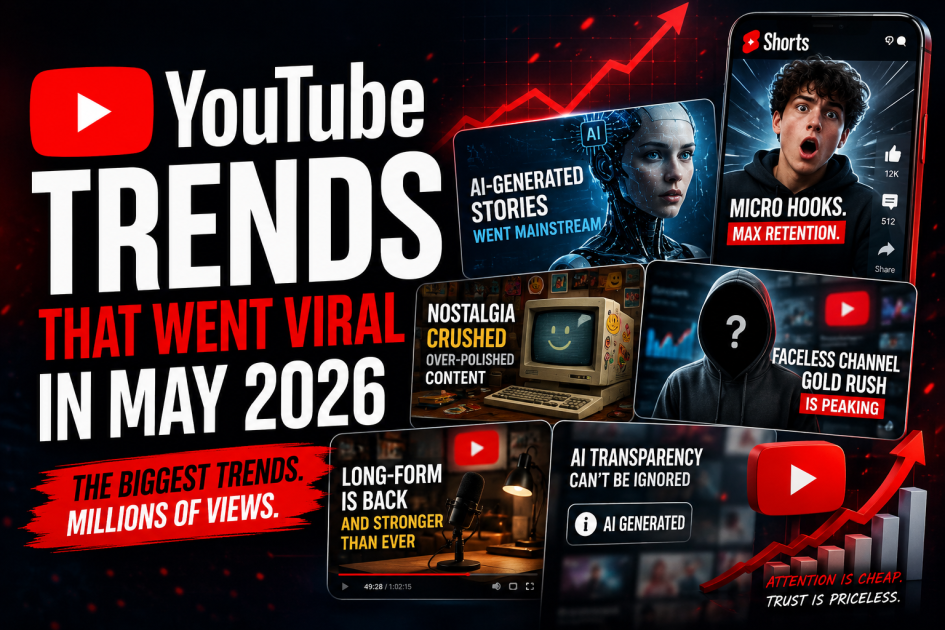
May 2026 exposed something uncomfortable about YouTube: the platform is no longer rewarding the “best” videos. It rewards emotional interruption. The creators winning right now understand how to hijack attention before viewers can even decide whether they care.
That shift became impossible to ignore this month.
AI-generated content flooded YouTube harder than ever, but most of it was forgettable within seconds. The channels that truly broke through weren’t simply using AI tools — they were using them to amplify recognizable personalities, niche obsessions, or internet-native humor. There’s a major difference. Audiences already learned how to filter generic AI sludge almost instinctively.
AI Videos Went Viral — But Most of Them Were Disposable
The biggest growth category in May was AI-assisted storytelling. Historical simulations, fake documentaries, alternate timelines, synthetic podcast clips — YouTube was overloaded with them.
But here’s what many marketers still misunderstand: viewers are not impressed by AI anymore. The novelty phase is ending fast.
What worked instead were concepts strong enough to survive even if the AI visuals looked imperfect.
Channels recreating ancient Rome as modern-day vlogs performed extremely well because the format itself was inherently clickable. Same with “What if historical figures had podcasts?” or “POV: You’re living inside a cyberpunk city in 2090.” The idea carried the video. AI simply accelerated production.
A lot of creators copying those trends failed because they focused entirely on visual quality while ignoring narrative tension. YouTube’s algorithm is brutally efficient at detecting boredom now. High production value means almost nothing if retention collapses after thirty seconds.
That’s why many low-budget creators quietly outperformed polished AI channels this month.
Shorts Became Aggressively Competitive
YouTube Shorts in May 2026 felt less like content and more like algorithmic warfare.
Hooks became shorter. Cuts became faster. Dead space disappeared entirely.
Creators started structuring Shorts around “micro-retention spikes” — tiny moments every few seconds designed to stop viewers from swiping away. Sometimes it was a sudden camera zoom. Sometimes a tonal shift. Sometimes a deliberate interruption.
The strange part? Audiences complain about this style constantly, yet engagement data keeps rewarding it.
Educational creators adapted especially well. The old “10-minute explainer” format is losing ground fast among younger viewers. Now the winning structure looks more like:
- one shocking statement,
- one unexpected fact,
- immediate payoff,
- instant loop restart.
Not deeper learning. Faster stimulation.
That distinction matters because many creators still believe Shorts are a gateway to loyal audiences. Often they are not. Viral Shorts generate visibility, but they don’t automatically create communities. Plenty of channels crossed millions of views this spring while barely converting viewers into subscribers who actually return.
Nostalgia Crushed Hyper-Polished Content
One of the most revealing trends in May was the return of intentionally messy editing.
Old YouTube aesthetics came back everywhere:
- grainy zooms,
- outdated fonts,
- chaotic sound effects,
- low-resolution memes,
- awkward cuts left intentionally unedited.
This wasn’t laziness. It was rejection.
Audiences are getting tired of content that feels focus-grouped into existence. Overproduced videos increasingly trigger skepticism because viewers associate them with sponsorship funnels, faceless media brands, or AI-generated spam farms.
The relaunch of Vine-inspired short comedy formats accelerated this trend even further. Six-second absurdist humor started resurfacing across Shorts feeds because it feels unpredictable again. Modern social platforms became so optimized that randomness itself now feels fresh.
Ironically, creators spending less time polishing videos often looked more authentic than channels investing thousands into cinematic editing.
The “Faceless Channel” Gold Rush Is Already Peaking
A huge number of creators entered 2026 believing faceless AI channels were easy money. By May, reality started catching up.
The market is oversaturated.
YouTube is filled with identical motivational edits, robotic celebrity explainers, fake business stories, and recycled Reddit narrations. Most of them die immediately because viewers recognize the template within seconds.
The channels still growing in this category usually have one advantage:
- strong scripting,
- unusual subject expertise,
- distinctive humor,
- or genuinely obsessive niche focus.
Generic automation is collapsing under its own weight.
That’s why personality-driven creators are quietly regaining leverage. Audiences forgive imperfect editing when the creator feels real. They do not forgive boredom anymore.
Long-Form Videos Made a Serious Comeback
This surprised a lot of people.
While Shorts dominate discovery, long-form content became significantly more valuable for monetization and audience loyalty during May 2026. Smart creators stopped treating long videos as secondary content. Instead, Shorts became trailers feeding viewers into larger ecosystems.
Podcast clips exploded partly because viewers increasingly want parasocial familiarity — not just stimulation. People spend hours listening to creators they trust while working, gaming, or commuting.
That’s a major reason documentary-style channels performed so well this month too. Deep internet investigations, creator scandals, gaming history breakdowns, and tech analysis videos consistently held attention longer than many analysts expected.
The audience appetite for depth never disappeared. Most platforms simply trained viewers to expect speed first.
AI Transparency Became Impossible to Avoid
YouTube’s labeling systems for AI-generated content became far more visible in May, and honestly, it was overdue.
The amount of synthetic content hitting the platform is becoming difficult to overstate. Some feeds now look partially machine-generated by default.
This creates a strange split:
- younger viewers often do not care whether content is AI-made,
- older audiences increasingly distrust synthetic media entirely.
Creators are adapting differently depending on their audience demographics. Some openly market themselves as AI-native creators. Others emphasize that their videos are “fully human-made” almost like an organic food label.
That alone says a lot about where internet culture is heading.
The Real Trend Was Psychological
Most articles covering YouTube trends focus too heavily on formats and not enough on behavior.
The real shift in May 2026 was psychological saturation.
Audiences consume so much content now that they’ve developed extremely advanced filtering instincts. People recognize manufactured engagement tactics faster than creators realize. They can sense fake authenticity almost immediately.
That’s why some technically “bad” videos suddenly outperform polished content. Human unpredictability has become competitive again.
Creators who still think success is mainly about thumbnails, upload frequency, or AI automation are missing the deeper change happening underneath the platform.
YouTube is entering an era where attention is cheap, but genuine audience trust is becoming extremely expensive.
