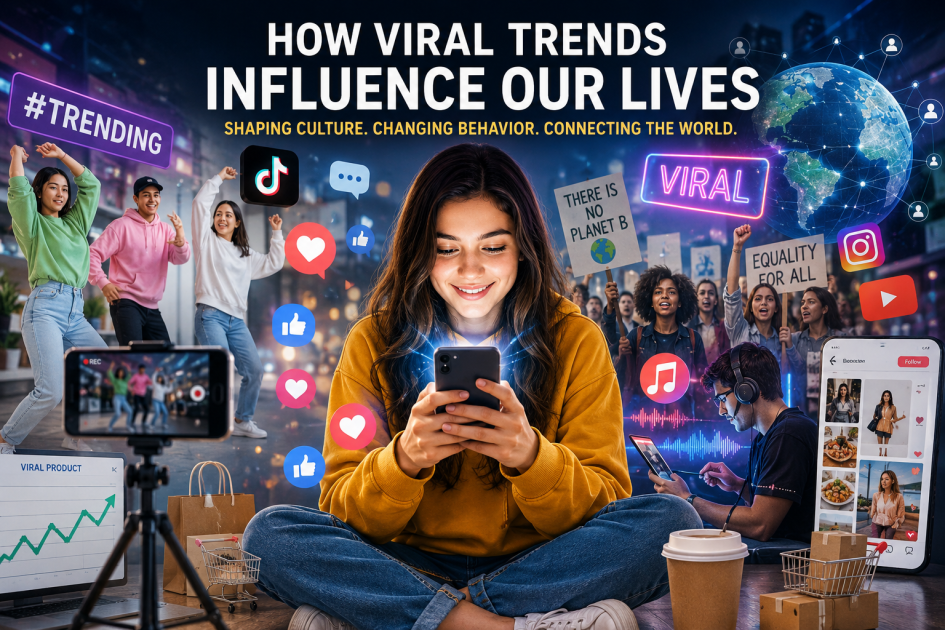
Viral trends have become one of the most powerful forces shaping modern culture. What once took years to spread through society can now reach millions of people within hours through platforms like TikTok, Instagram, X (Twitter), YouTube, and emerging short-form video apps. Whether it’s a dance challenge, a meme format, a political hashtag, or a lifestyle hack, viral trends influence how we think, speak, shop, and even how we see ourselves.
What Makes Something Go Viral?
A trend becomes “viral” when it spreads rapidly across digital networks, often driven by user engagement — shares, likes, comments, and remixes. Several factors contribute to virality:
- Emotional impact: Content that makes people laugh, feel inspired, angry, or surprised spreads faster.
- Simplicity: Easy-to-understand ideas or formats are more likely to be copied.
- Relatability: People engage more when they see their own experiences reflected.
- Algorithms: Social media platforms amplify content that keeps users engaged longer.
In many cases, virality is less about quality and more about timing, emotion, and platform mechanics.
How Viral Trends Shape Culture
Language and communication
Phrases like “it’s giving,” “rizz,” or “no cap” originate or spread through viral content. These expressions quickly become part of everyday speech, especially among younger audiences.
Fashion and aesthetics
TikTok and Instagram trends often dictate what people wear. From “clean girl aesthetic” to “streetwear revival,” viral visuals can directly influence global fashion brands and retail cycles.
Music and entertainment
Many songs become global hits only after going viral in short-form videos. A 15-second clip can revive old tracks or launch unknown artists into mainstream fame.
Psychological Impact of Viral Trends
FOMO (Fear of Missing Out)
When everyone is participating in a trend, people may feel pressure to join in to stay socially connected.
Validation and identity
Likes, shares, and comments create a feedback loop that can influence self-esteem and identity formation, especially among teenagers and young adults.
Attention fragmentation
Constant exposure to fast-moving trends can reduce attention spans and make long-form focus more difficult over time.
Consumer Behavior and Marketing Influence
Brands closely monitor viral trends because they directly affect buying behavior:
- Products featured in viral videos often sell out within days.
- Influencers can turn unknown items into “must-haves.”
- Marketing increasingly relies on meme culture instead of traditional ads.
In many cases, virality has replaced traditional advertising as the most effective form of promotion.
The Dark Side of Virality
- Misinformation spreads quickly: False news can reach millions before correction.
- Pressure to conform: People may feel forced to participate in trends they don’t enjoy.
- Short-lived relevance: Trends disappear quickly, creating constant replacement cycles.
- Mental overload: Fast content cycles can lead to digital fatigue.
Positive Effects of Viral Trends
- They democratize creativity — anyone can go viral.
- They raise awareness about social issues and global events.
- They build communities around shared interests.
- They inspire innovation in art, music, and storytelling.
Viral trends are more than just internet entertainment — they are a reflection of how modern society communicates, consumes content, and builds culture. They can inspire creativity, shape industries, and connect people globally.
At the same time, they require critical thinking to avoid manipulation, misinformation, and digital overload. In a world where attention is one of the most valuable resources, viral trends will continue to play a central role in influencing how we live, think, and interact.
